Pennsylvania’s municipal UCC status determines where the review goes. Identify the municipality and whether the work is residential or commercial before selecting a submission checklist or assuming the same reviewer handles both.
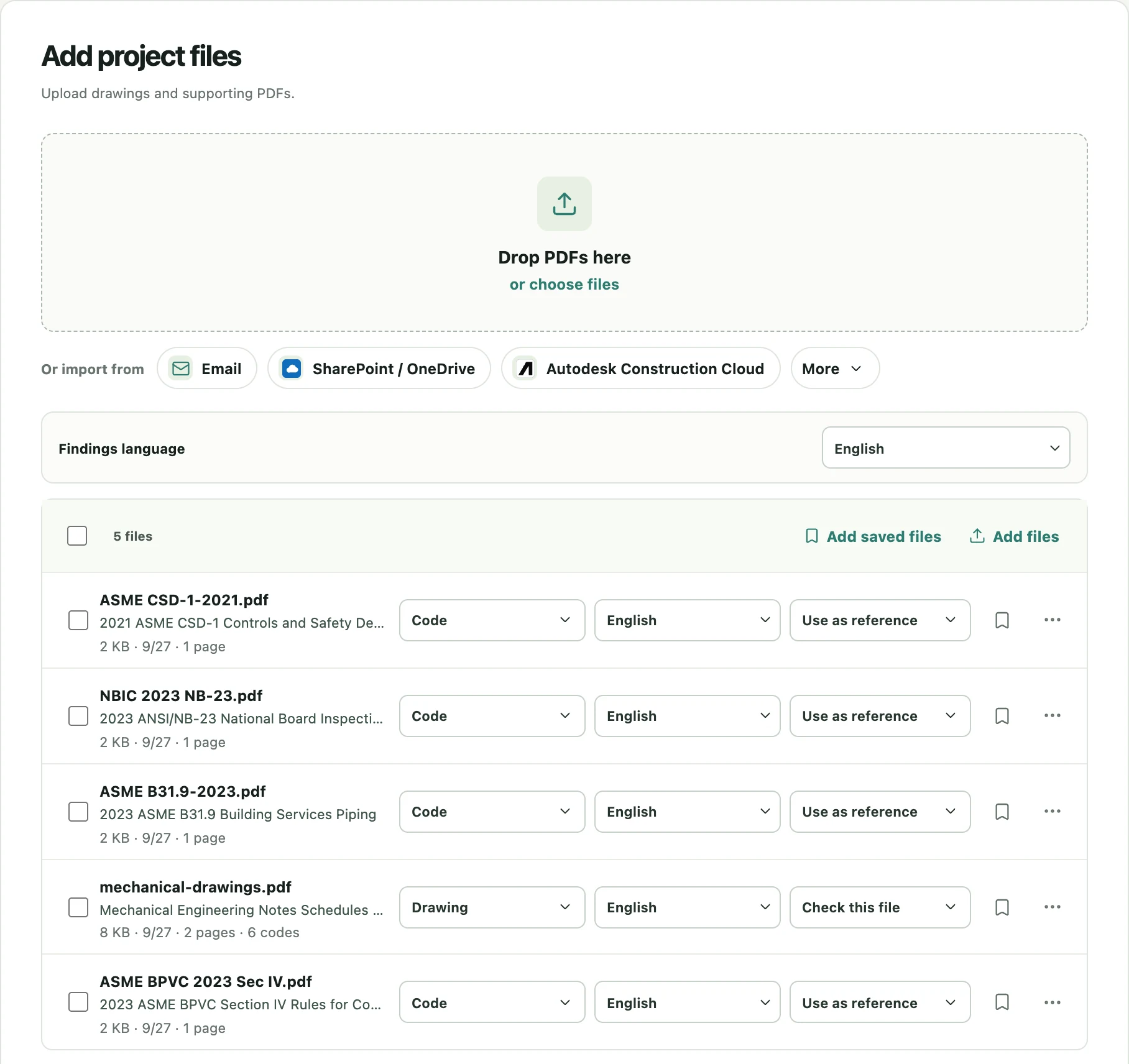
Groundbook can review your drawings against the state and local code PDFs you upload. Add the adopted code books and amendments that apply to your project, then review potential issues with links to the supporting sources.
Add your references
Upload the applicable code PDFs alongside the drawing set. Include the edition, local amendments, and project requirements.
Choose each file’s role
Set code PDFs to Code and Use as reference. Mark the drawings you want reviewed as Check this file.
Review the findings
Follow the linked drawing and reference, check applicability, and have the responsible professional verify the issue.
California code PDFs shown as an example. Upload the references that apply to your project.Try with your code PDFs
State and local references
Code references for Pennsylvania
Examples of references you can bring into Groundbook. Confirm the adopted edition, effective date, and project scope with the reviewing authority, then upload the applicable PDFs.
Use the incorporated provisions with Pennsylvania modifications and any applicable municipal ordinances.
Code names link to official agency or publisher resources. Reviewed September 9, 2026. The reference set comes from the files you supply.
Pennsylvania reference guide
Establish who reviews what
Resolve opt-in or opt-out routing
Pennsylvania DLI explains that it handles commercial enforcement in opt-out municipalities, while certified third-party agencies hired by owners or contractors handle residential UCC requirements there. Verify the project’s category and route.
DLI publishes a municipality table identifying UCC status and amendment information. Use that record and the applicable UCC update to build the reference set, then confirm current intake requirements with the actual enforcing agency.
Sources reviewed September 9, 2026. Confirm current requirements and project applicability with the reviewing authority.
Prepare a useful review
What to bring for Pennsylvania
Use this preparation list for Groundbook alongside the official permit checklist.
Municipality and project category
Provide the UCC status, residential/commercial classification, and enforcing agency’s confirmed scope. Include the applicable checklist.
UCC and amendment package
Upload the code basis and relevant local amendments, noting the application date and any permitted transition.
Agency response trail
Bring drawings, schedules, specifications, and comments from the municipal, state, or third-party reviewer. Trace each response into the current issue.
A current drawing register
Identify which files are being checked, which are references, and which revisions are superseded. Include reviewer comments and responses where they explain an unresolved decision.
Does a Pennsylvania opt-out municipality mean the project has no UCC review?
No. DLI describes state commercial enforcement and certified third-party residential enforcement in opt-out municipalities. Confirm the route for the project rather than treating opt-out as a code exemption.
Which documents should I supply for a Pennsylvania AI plan review?
Supply the current drawing set and schedules, relevant specifications and reports, the applicable code and amendment PDFs, and the reviewing authority’s checklist. Identify the edition, project scope, and permit stage. Groundbook reviews the supplied evidence; do not assume every local requirement is already available.
Does Groundbook approve a permit or certify compliance?
No. Groundbook surfaces potential conflicts and omissions with links to source documents for professional verification. It does not issue permits, certify compliance, provide permit-expediting services, or replace the authority having jurisdiction.