For Tennessee, determine whether the State Fire Marshal or an approved exempt jurisdiction performs the relevant plan review. An exemption describes who reviews the work; it should not be read as removing construction requirements.
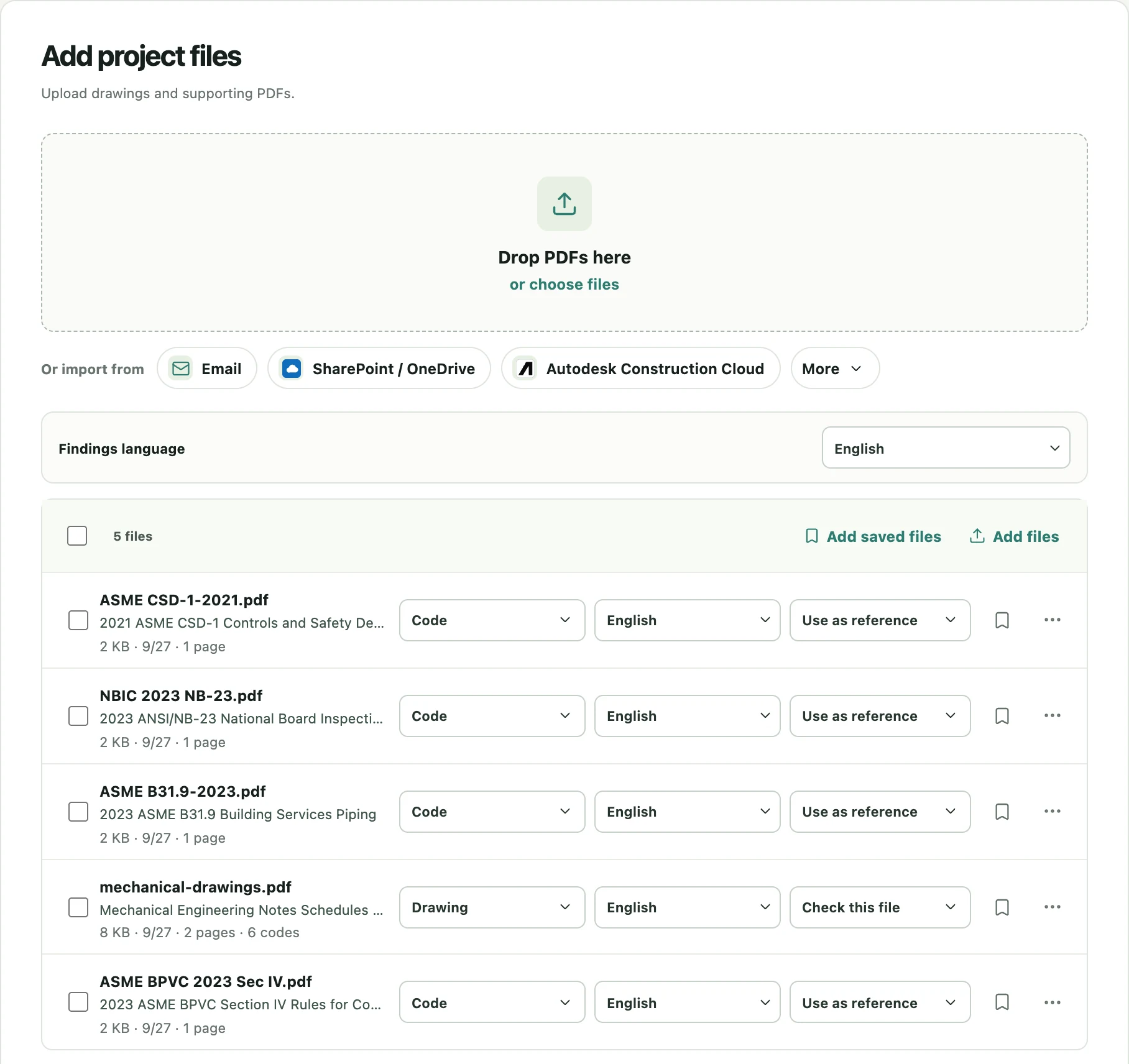
Groundbook can review your drawings against the state and local code PDFs you upload. Add the adopted code books and amendments that apply to your project, then review potential issues with links to the supporting sources.
Add your references
Upload the applicable code PDFs alongside the drawing set. Include the edition, local amendments, and project requirements.
Choose each file’s role
Set code PDFs to Code and Use as reference. Mark the drawings you want reviewed as Check this file.
Review the findings
Follow the linked drawing and reference, check applicability, and have the responsible professional verify the issue.
California code PDFs shown as an example. Upload the references that apply to your project.Try with your code PDFs
State and local references
Code references for Tennessee
Examples of references you can bring into Groundbook. Confirm the adopted edition, effective date, and project scope with the reviewing authority, then upload the applicable PDFs.
Include the applicable fire reference and amendments with the occupancy and life-safety documents.
Code names link to official agency or publisher resources. Reviewed September 9, 2026. The reference set comes from the files you supply.
Tennessee reference guide
Establish who reviews what
Check the exempt-jurisdiction list
Tennessee identifies exempt jurisdictions approved to perform reviews and inspections for buildings that would normally require State Fire Marshal approval. Confirm the locality and its applicable code basis.
The state’s plans-submittal guidance lists project categories requiring review and qualifications to that scope. Use the project’s ownership, lease, and occupancy information to establish the correct route.
Sources reviewed September 9, 2026. Confirm current requirements and project applicability with the reviewing authority.
Prepare a useful review
What to bring for Tennessee
Use this preparation list for Groundbook alongside the official permit checklist.
Review route and use
Supply the exempt-jurisdiction confirmation or state-review determination, occupancy, ownership/lease status, and applicable checklist.
Adopted local or state references
Include the governing code editions and amendments from the reviewing office. Do not assume exempt jurisdictions share the state’s exact edition.
Coordinated scope package
Bring life-safety drawings, site access, fire-protection documents, MEP plans, schedules, and prior comments. Identify separate approvals and unresolved interfaces.
A current drawing register
Identify which files are being checked, which are references, and which revisions are superseded. Include reviewer comments and responses where they explain an unresolved decision.
Does an exempt Tennessee jurisdiction mean the building is exempt from plan review?
The state uses this term for approved local jurisdictions that perform specified reviews and inspections. Confirm the local code and submission route; do not treat the designation as a general exemption for the building.
Which documents should I supply for a Tennessee AI plan review?
Supply the current drawing set and schedules, relevant specifications and reports, the applicable code and amendment PDFs, and the reviewing authority’s checklist. Identify the edition, project scope, and permit stage. Groundbook reviews the supplied evidence; do not assume every local requirement is already available.
Does Groundbook approve a permit or certify compliance?
No. Groundbook surfaces potential conflicts and omissions with links to source documents for professional verification. It does not issue permits, certify compliance, provide permit-expediting services, or replace the authority having jurisdiction.