We’re at NCSEA in San Francisco, Oct 28–29 · Booth 110NCSEA · Booth 110 · Oct 28–29

Construction documents · Vermont

AI plan review in Vermont

In Vermont, “public building” is a statutory review category that can include privately owned property. Establish that scope with the Division of Fire Safety and keep state construction requirements separate from town planning and zoning approvals.

Your codes, connected to your drawings

Codes governments publish, and licensed codes you upload

We read the state and local codes and amendments that governments publish online, the way a human reviewer does. Our AI opens it in a web browser, goes to the section or table, and cites it in the finding with a link to the source. The model codes most states adopt, such as the International Building Code, are licensed; we use their text only where a license allows it, and you can upload a copy you’re licensed to use. We reference the section. We never copy or distribute code text.

  1. Confirm the codes

    We detect the codes your drawings cite in the code analysis, cover sheet, and general notes. Add or remove codes, and note the edition, local amendments, and project requirements.

  2. Choose each file’s role

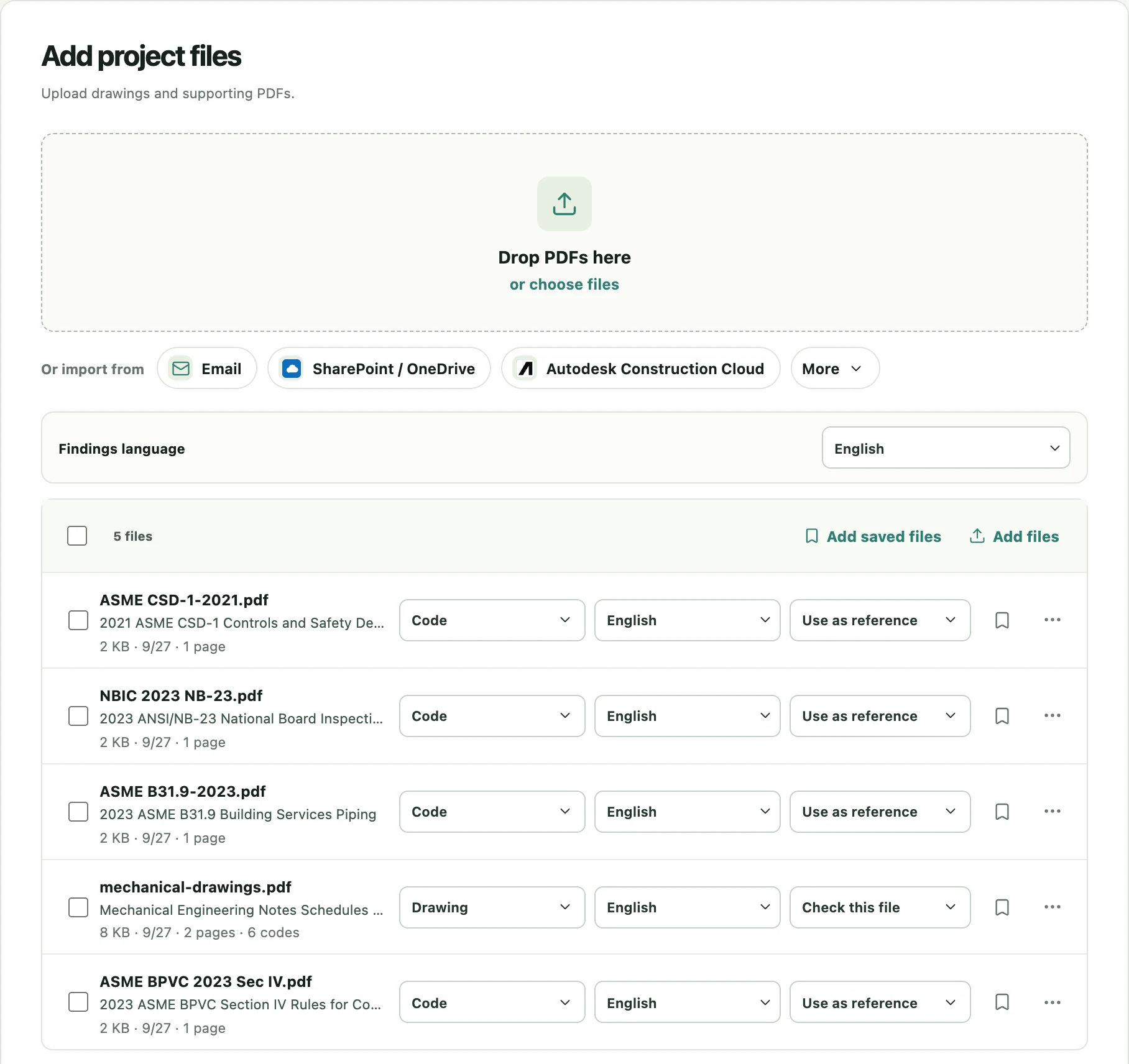
    Mark the drawings you want reviewed as Check this file. If you upload a code, such as a standard you’re licensed to use or an unpublished amendment, set it to Code and Use as reference.

  3. Review the findings

    Follow the linked drawing and code section, check applicability, and have the responsible professional verify the issue.

How to use local code references
Groundbook project files with four ASME and National Board code PDFs set to Code and Use as reference, and a mechanical drawing set marked Check this file.
Purchased ASME and National Board code PDFs shown as an example. Upload a code you’re licensed to use, where your license allows it, and save it to reuse on future projects.Start for free

State and local references

Code references for Vermont

Examples of codes that can apply in Vermont. Confirm the adopted edition, effective date, and project scope with the reviewing authority.

Code names link to official agency or publisher resources. Reviewed September 9, 2026. We detect the codes your drawings cite, and you can add or remove codes.

Vermont reference guide

Establish who reviews what

Confirm public-building applicability

The Division of Fire Safety’s permit guidance includes rentals and businesses among examples of public buildings, with specified exceptions. Ownership alone does not establish whether a state construction permit is required.

Vermont Fire Safety: state-permit guidance

Use the full Vermont reference set

The division publishes fire/building, electrical, plumbing, and access rules, and directs energy-standard questions to the Department of Public Service. Select all applicable references rather than relying on the building code alone.

Vermont Fire Safety: codes and standards

Sources reviewed September 9, 2026. Confirm current requirements and project applicability with the reviewing authority.

Prepare a useful review

What to bring for Vermont

Use this preparation list for Groundbook alongside the official permit checklist. Name the codes that apply.

Use and permit scope

State whether the property is owner-occupied, rented, commercial, or another use. Include the regional office’s applicability determination and checklist.

State and town conditions

Supply state review comments and relevant town approvals or conditions. Identify which decisions concern construction safety and which concern planning or zoning.

Energy and system documents

Name the selected energy codes and bring envelope documents, electrical/plumbing/MEP plans, fire-protection scope, and schedules. Compare values and work boundaries across packages.

A current drawing register

Identify which files are being checked, which are references, and which revisions are superseded. Include reviewer comments and responses where they explain an unresolved decision.

Use the drawing-register template

Before you start

Vermont plan review FAQs

Does privately owned mean a Vermont building is outside public-building review?

No. Fire Safety guidance includes privately owned uses such as rentals and businesses. Confirm the statutory category and exceptions with the division; town approvals are a separate consideration.

Which documents should I supply for a Vermont AI plan review?

Supply the current drawing set and schedules, relevant specifications and reports, and the reviewing authority’s checklist. Identify the edition, project scope, and permit stage. We read the state and local amendments that governments publish online. The base model codes, such as the International Building Code, are licensed; we use their text only where a license allows it. You can upload a code you’re licensed to use, or an amendment that isn’t online.

Does Groundbook approve a permit or certify compliance?

No. Groundbook surfaces potential conflicts and omissions with links to source documents for professional verification. It does not issue permits, certify compliance, provide permit-expediting services, or replace the authority having jurisdiction.

Projects in more than one state

More New England plan review guides

For another project's location, start with its own authority and reference list. Requirements and adopted editions can differ across state lines.

Official source directory

Keep the reference trail

Browse all states and city guides

Review the set before you submit

Bring your drawings. We read the local codes and amendments that governments publish online.

Check your Vermont permit set before you submit

Trusted by hundreds of professionals

Product screenshot